Key summary — short, direct answer
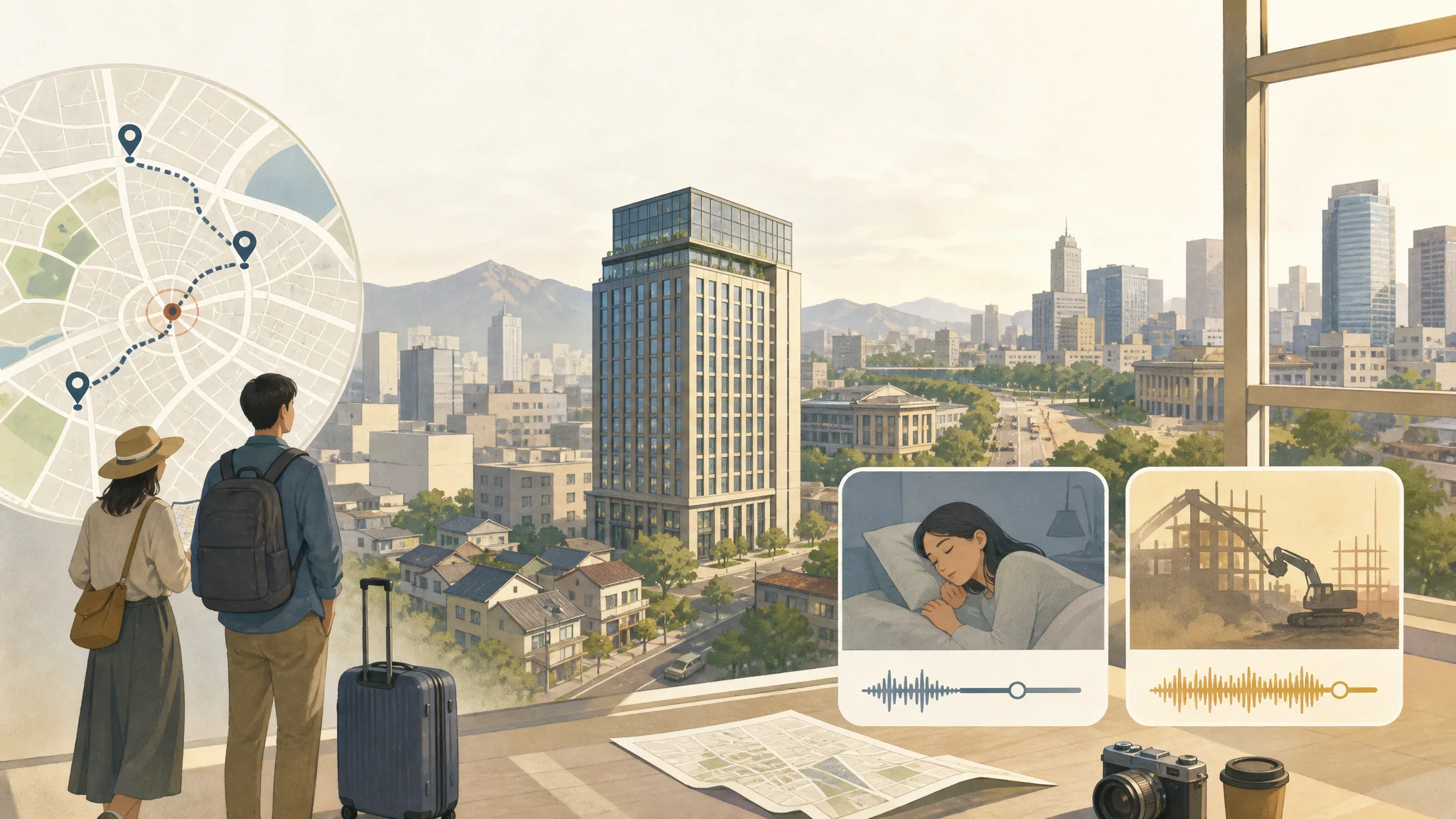
Seoul approved at the Urban Architecture Joint Committee on October 28, 2026 (committee review; publicly announced October 29) a proposal to build a tourist accommodation facility at Bukchang-dong 130-1: three basement levels, 23 floors above ground, and a total of 256 rooms. The site is close to Seoul City Hall and Namdaemun, offering good walkability for downtown tourists. Note that this decision is a committee approval of the plan; actual construction start, completion, and opening dates depend on separate procedures (building permits, construction notifications) and the developer's schedule.
What this approval changes (impact on accommodation choices)
- Location advantage: Bukchang-dong 130-1 sits within easy walking distance of Seoul City Hall and Namdaemun Market. Reports indicate it is about a 10-minute walk from City Hall Station and Hoehyeon Station.
- Increased room supply: Adding 256 rooms in the city center can help ease downtown room shortages, particularly affecting foreign tourists and short-stay city visitors.
- Public access and openness: The plan includes a publicly accessible lounge/open space on the ground floor, intended to serve both tourists and local residents.
- Infrastructure upgrades: The review included requirements for improvements to roads, parks, and water/sewer infrastructure; plans mention replacing aging sewer pipes and other surrounding infrastructure work. These upgrades are tied to the project but may be scheduled separately from hotel construction.
(The above summarizes the committee outcome as reported by Yonhap News, Seoul Economic Daily, ChosunBiz, and other coverage.)
Traveler perspective: who should choose Bukchang-dong and who should avoid it
Recommended travelers (who should consider staying near Bukchang-dong)
- Downtown-first tourists: 1–3 day visitors who prioritize walking between City Hall, Namdaemun, and Myeongdong with short transit times.
- Business-and-leisure travelers: Guests with daytime business in the City Hall/Mjung district who want evening sightseeing.
- First-time visitors and convenience-focused travelers: Those who prioritize airport limousines, city bus access, and proximity to major attractions.
Travelers who may want to avoid it
- Travelers seeking quiet, residential immersion or who are sensitive to nighttime noise (city-center areas have active nightlife and commercial activity).
- Long-stay visitors prioritizing larger rooms and kitchen facilities for cost efficiency — hotels in central Bukchang-dong are likely optimized for business/tourist room types.
These recommendations assume committee approval does not immediately equate to an operational hotel (construction and opening schedules remain unconfirmed).
Bukchang-dong vs nearby alternatives (tourist route, subway, characteristics)
| Area | Main subway access | Tourist route | Strengths | Weaknesses |
|---|---|---|---|---|
| Bukchang-dong (near 130-1) | City Hall Station (Lines 1·2) · Hoehyeon Station (Line 4) within walking distance (about 5–10 min) | City Hall → Namdaemun → Myeongdong walk best | Adjacent to City Hall/Namdaemun, ideal for walking tours, new facility (planned) | Central-city noise/crowding, construction/opening uncertainties |
| Myeongdong | Euljiro 1-ga · Myeongdong Station (Line 4) | Shopping and dining hub, tourist density | Best access to shopping/dining, lively nightlife | Higher accommodation prices, crowded |
| Jongno / Insadong | Jongno 3-ga · Anguk Station, etc. | Traditional culture, temples, hanok areas | Strong for cultural tourism, many hanok guesthouses | Tourist crowds in places, some quieter areas at night |
| Gangnam / Jamsil | Gangnam Station · Jamsil Station | MICE, shopping, business oriented | Excellent shopping and convention access | Farther from central tourist spots, possible traffic congestion |
Table note: this comparison is oriented to downtown-focused tourists. Confirm individual hotel features (room types, breakfast, cancellation policy) on the hotel’s official announcement and booking sites.
Practical booking checklist (for the planned Bukchang-dong hotel)
- Confirm the official "opening (start of operations) date" — committee approval does not guarantee immediate construction or opening.
- Check for construction/noise updates — verify whether surrounding works (construction, roadworks) have scheduled start dates before booking.
- Prefer flexible cancellation/change terms — initial room offers around opening can change policies; choose flexible options where possible.
- Consider the ground-floor public lounge and facilities — if open public spaces matter to you, this is a plus.
- Prepare alternative hotels — have backup options in Myeongdong, Jongno, Euljiro in case opening is delayed.
Recommendation (who should pick this option) and variables that could change it
Recommendation: The new Bukchang-dong hotel will be attractive for short downtown tourists and business travelers with work in the City Hall/central district. If your trip is in 2027–2028 or later, verify the hotel's official opening date before booking.
What could change this recommendation: Delays in construction/start dates, unexpectedly high noise or traffic after opening, or hotel room mix and pricing details once announced could alter suitability for travelers who need quiet stays or larger family rooms.
Summary of evidence and sources
This article summarizes the Urban Architecture Joint Committee review reported by Yonhap News (2026-10-29), Seoul Economic Daily (English edition, 2026-10-29), and ChosunBiz (2026-10-29). The committee approval, scale (3 basement levels · 23 floors · 256 rooms), proximity to City Hall/Namdaemun, planned ground-floor public lounge, and infrastructure improvement plans are drawn from those reports. Construction, completion, and opening dates were not finalized in those reports; confirm official hotel statements before booking.