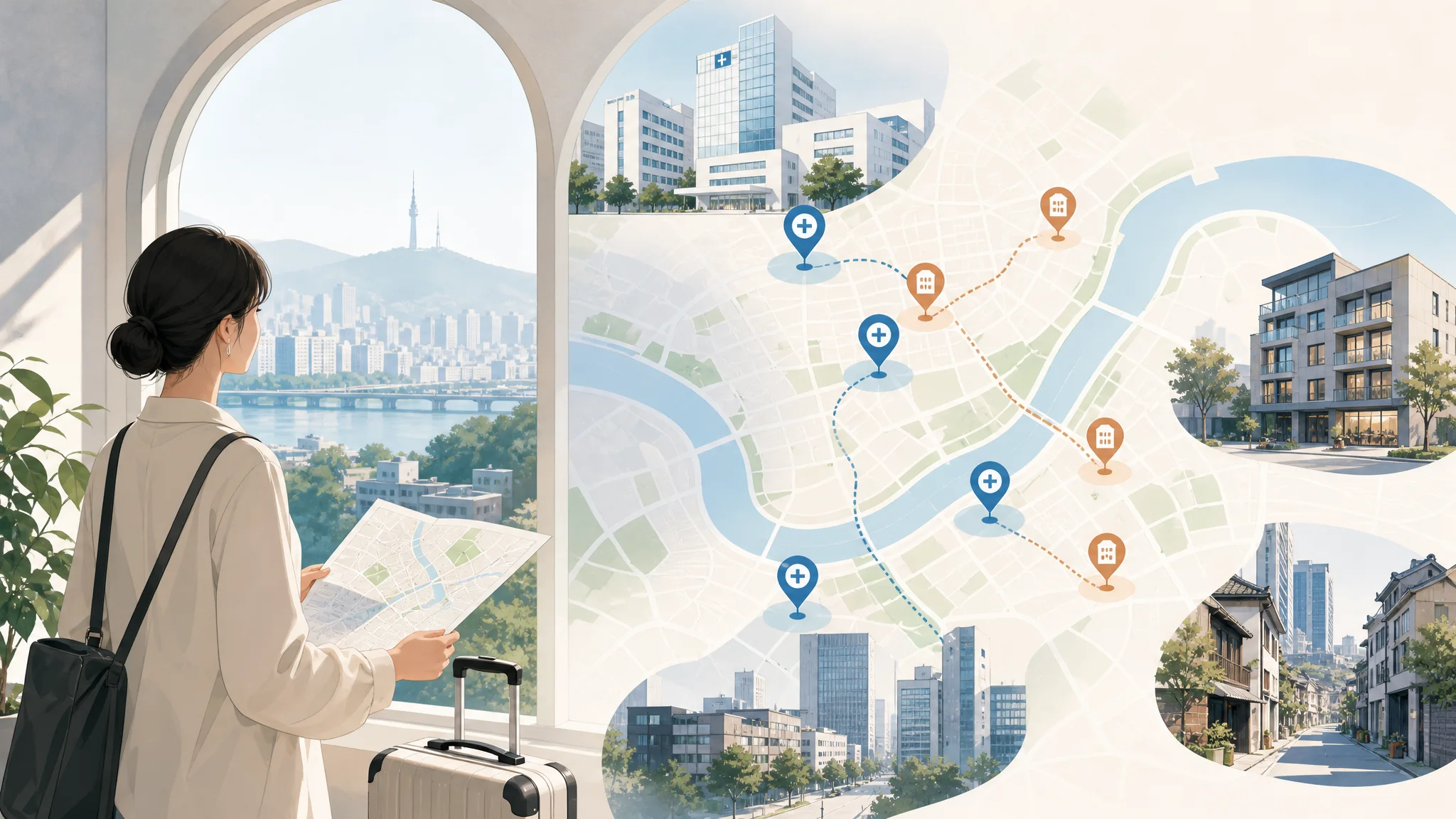
Key takeaway — direct answer: Seoul designated 19 “medical‑friendly accommodations” in a 2026 public call for foreign patients and accompanying family. Selection criteria included hospital access, long‑stay convenience, 24‑hour emergency response systems and features such as laundry and wheelchair circulation routes. Many selected properties are concentrated in the Gangnam area.
What was announced (at a glance) - When: The selections and announcements were made on November 2, 2026, by major media and the Seoul city authorities. - What: Seoul Metropolitan Government and the Seoul Tourism Foundation ran an open call (40 applying facilities in total) and, after document, on‑site and expert review, finalized 19 accommodations. (Selection criteria: hospital access, long‑stay options and amenities such as laundry and kitchens, 24‑hour emergency response and wheelchair circulation routes.) - Validity & support: The certification given to selected facilities is valid for one year from the designation date. Seoul will support multilingual promotion, links with medical institutions, and staff customer‑service training.
Who this is useful for and what tradeoffs it covers - Intended readers: foreign patients and companions receiving surgery, procedures or detailed tests in Seoul; travelers considering long stays for recovery; agencies connecting or recommending medical institutions and accommodations. - Core tradeoff addressed: prioritize “close to the hospital/clinic → shorter transfers and lower emergency risk” versus “residence/apartment style in central areas → better family and long‑stay convenience (kitchen, laundry).” - When recommendations change: for short post‑operative recovery (including same‑day admission/discharge), prioritize lodging within walking distance or a 10–20 minute taxi ride of the hospital. For multiple outpatient visits or family stays of one week or more, favor residence‑style properties with kitchens and laundry.
Neighborhood and accommodation type comparison (by medical schedule) | Priority / situation | Gangnam (clinics, cosmetic & dermatology cluster) | Near large hospitals (Jongno, Jung‑gu, Yeongdeungpo etc.) | Residences / Yeouido & central areas (long stays, family) | |---|---:|---:|---:| | When recommended | Many same‑day procedures and outpatient visits | Recovery immediately after hospitalization/surgery | Stays of one week or more, family accompanying, cooking and simple self‑care needed | | Travel advantage | Multiple specialized clinics close together → minimize transfers | Hospital within walking distance or short taxi ride → minimize travel burden | Requires travel to hospital → supplement with taxi or shuttle | | Accommodation types | Business hotels, designer hotels (amenities & privacy) | Small/medium hotels, serviced residences | Apartment‑style residences, residence hotels (kitchen & laundry) | | Long‑stay convenience | Limited (may lack kitchen) | Some rooms with kitchen/laundry available | Advantageous for kitchens, laundry and storage | | Emergency & language support | Some selected properties offer multilingual emergency guidance and pickup | Check for 24‑hour front desk and emergency response systems | Multilingual guidance and long‑stay discounts more common |
(Note) The selection covers a range from five‑star hotels to mid‑range properties to widen user choices.
Example properties and geographic distribution (based on media reports) - Media reports list properties such as 그랜드 인터컨티넨탈 서울 파르나스, 안다즈 서울 강남, 파크 하얏트 서울, 호텔 나루 서울 엠갤러리, 여의도 메리어트 이그제큐티브 아파트먼트 among the selected accommodations, and report that 11 properties are concentrated in Gangnam district. (For the full list, check Seoul Metropolitan Government and Seoul Tourism Foundation official guidance.)
Practical pre‑booking checklist you must confirm 1. Have you measured taxi and public‑transport travel times from the hospital (hospital name) to the accommodation (normal hours/night) yourself? 2. Have you confirmed room accessibility for wheelchair entry and bathroom access (grab bars, non‑slip fixtures)? 3. Are long‑stay options (laundry, kitchen, mini‑fridge) available, and what are long‑stay rates, discounts, extensions and cancellation rules for medical reasons? 4. Is there a 24‑hour front desk and emergency contact (including multilingual support)? Can you receive the accommodation’s emergency response procedure in writing? 5. Does the property provide pickup/sending (airport or hospital transfers) or a hotel‑hospital shuttle service? 6. Confirm the property is actually designated as a Seoul “medical‑friendly accommodation” (certification or Seoul medical‑tourism multilingual guidance) — don’t rely only on promotional wording.
Simple booking decision rules (1‑minute decision) - Scheduled surgery/hospitalization (need to recover immediately after discharge): prioritize accommodation within the same district as the hospital or within a 10–20 minute taxi ride. - Multiple same‑day clinic visits (Gangnam cluster): prioritize Gangnam accommodations. - Family accompanying / tourist activities / long‑stay: choose residence‑style properties (kitchen, laundry) or residences in Yeouido/central areas.
What to verify further (uncertainties & follow‑up points) - Confirm the full official list of 19 facilities and the exact services each property provides (private lounge, multilingual emergency guidance, pickups, etc.) on the Seoul medical‑tourism official page and the individual property’s information. - The “medical‑friendly” mark should be verified via Seoul’s certification and Seoul Tourism Foundation guidance; do not assume a property is certified based solely on its own marketing.
If you’d like, tell me the hospital name and the area or candidate properties you’re considering and I’ll compare travel times and recommend the most suitable accommodation type.